A person in the water is much harder to see than most boaters realize.
By: Jamie Burnett
This Summer, we were riding down the main channel of Lake Martin when a pontoon pulling a tuber suddenly turned and started coming toward us.
We immediately pulled the throttle back and slowed to idle, wondering where the captain was going.
Then we saw them.
About 100 yards ahead of us, two tiny arms appeared above the water, waving back and forth. A young rider had fallen off the tube.
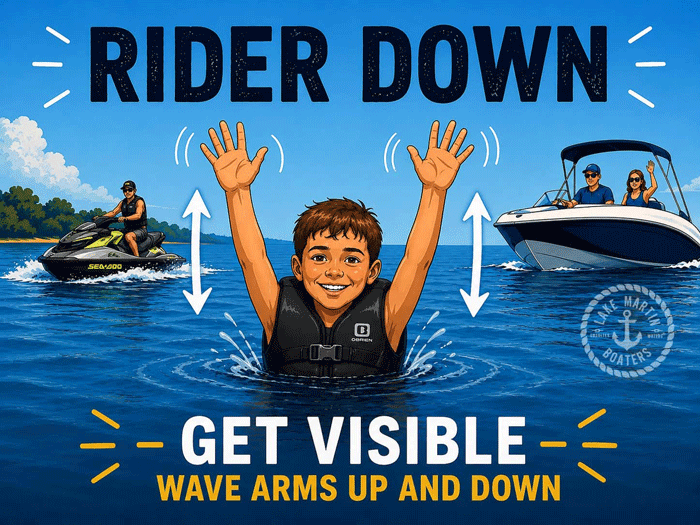
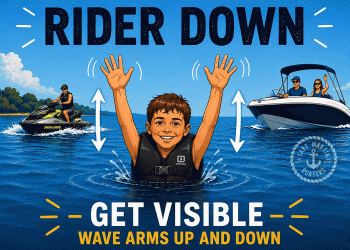
Between the boat traffic, big waves and glare on the water, that little guy was surprisingly difficult to see. But he knew exactly what to do. He raised both arms high and waved to make himself visible to approaching boats.
The pontoon captain was also doing what a responsible operator should do. He turned back carefully and positioned the boat to help alert approaching traffic and protect the rider while returning to pick him up.
We were plenty far away and had already slowed, but the experience was a powerful reminder:
A person in the water is much harder to see than most boaters realize. Lake Martin continues to grow and get busier every summer. Every year going forward will have more boats than the year before and we want to prepare our riders to be visible if and when they fall.
Teach Riders Before You Leave the Dock
Before pulling anyone on a tube, skis, wakeboard or wakesurf board, take a few minutes to explain what they should do if they fall.
This lesson is especially important for children, but every rider should know it.
If You Fall, Get Visible
Stay calm. Your life jacket will help keep you afloat.
Raise both arms above the water. Wave them up and down to attract attention when needed.
Hold your board or skis upright when possible. Equipment extending above the water is much easier for other boaters to see.
Stay with your equipment if it is safely within reach. Do not swim into boat traffic trying to chase equipment that is drifting away.
Never assume an approaching boat can see you. Even if you can clearly see the boat, its operator may not be able to see your head among the waves.
Keep watching for surrounding traffic while waiting for your tow boat to return.
Children can even practice these steps in the water before the boat ride begins. Teach them to raise their hands, wave and hold their equipment upright so the response becomes automatic.
Choose Life Jackets That Can Be Seen
Dark blue, black and other dark-colored life jackets may blend into the water, especially from a distance.
When choosing a life jacket for tubing or other watersports, consider bright colors such as:
Neon yellow
Orange
Red
Hot pink
Lime green
The best life jacket is one that fits properly, is approved for the activity and helps make the rider easier to spot.
Every Boat Operator Should Be Watching
You do not have to be pulling a rider to help prevent an accident.
When you see a tow boat turn unexpectedly, slow down. There may be a rider in the water that you cannot see yet.
Watch for:
Raised arms
An upright board or pair of skis
A tow rope floating on the water
A spotter waving from another boat
A boat circling back or slowing suddenly
Give the area plenty of room and remain alert until you know everyone is safely aboard.
Rider Down Means Get Visible
That little guy may have been tiny, but he knew exactly what he had been taught to do.
Whoever taught him deserves some credit. Nice job! 👏
RIDER DOWN = GET VISIBLE
A few minutes of instruction before the ride can make a big difference on a busy lake day. Teach it before leaving the dock, practice it with children and remind riders every time they get behind the boat.
Let’s continue helping one another online and on the water so everyone makes it home safely after every boat day.
This educational guide provides general safety reminders and is not all-encompassing. Information may be incomplete, and laws and best practices can change. Follow current official regulations, manufacturer instructions, and sound operator judgment. This is not legal advice.
Disclaimer: This article is provided for general educational and informational purposes only. It is not legal advice and should not be relied upon as a substitute for advice from a qualified attorney or guidance from the appropriate law-enforcement or government agency. Reading this article does not create an attorney-client relationship.
Laws, regulations, enforcement practices and official guidance may change over time and may also vary depending on the specific circumstances. While Lake Martin Boaters™ strives to provide accurate and timely information, we cannot guarantee that every applicable law, regulation, exception or update has been included or that the information remains complete and current when you read it.
Boat owners, operators and passengers are responsible for knowing and following all current laws, regulations, posted restrictions, manufacturer instructions and lawful directions from enforcement personnel. Always use good judgment and take any additional precautions necessary for the conditions. For current boating laws and official updates, please visit the Alabama Law Enforcement Agency or consult a qualified Alabama attorney.